
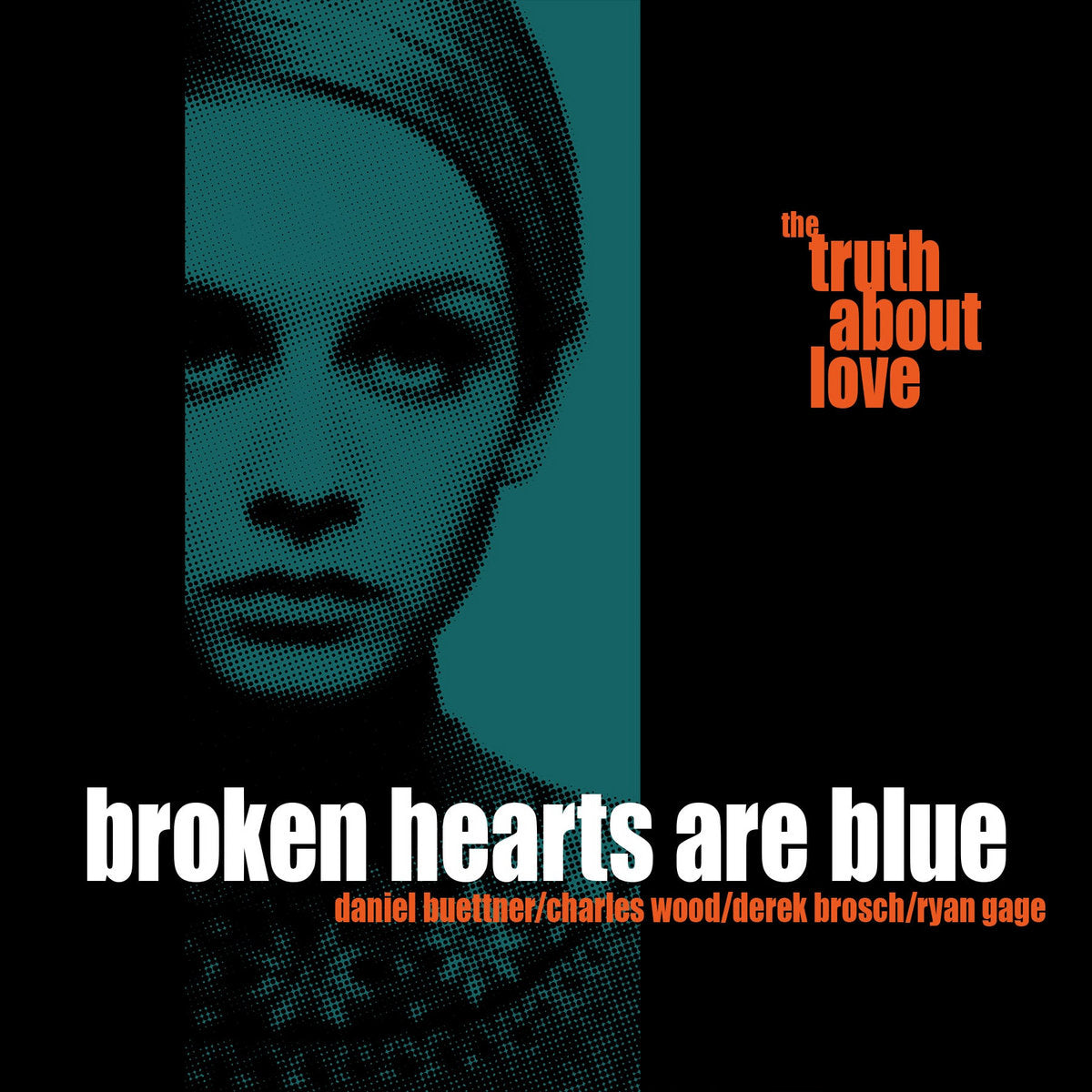
Michigan’s Broken Hearts Are Blue were a short-lived band from the ’90s Midwest emo scene with members who had previously played in Current, Ordination of Aaron, Vine, and Ottawa, and they never got as big as peers like The Promise Ring (who they shared bills with), Christie Front Drive (who they were Caulfield Records labelmates with), or Braid (who covered them for a 2015 7″), but if you like that kind of stuff and you’ve never checked them out, you’ll probably like BHAB too. They reunited a few years back and have released more new music during their reunion than they did in the ’90s, including this year’s Meeting Themselves, and now they’re giving their sole ’90s album, 1997’s The Truth About Love, a remastered reissue this Friday (6/28) via Sweet Cheetah Records and Poptek Records. It marks the album’s first cassette release, and also comes out digitally (pre-order).
“The Truth About Love was born of the persistent struggle of artists to erase the works and discourse of the elevated masters who came before, and who were withering on the vine of their acclaim,” says vocalist Ryan Gage. “Thus, in this particular historical and ideological moment, the album stood in as the Robert Rauschenberg to Screamo’s Willem de Kooning.”
About the album artwork, Ryan told No Echo in 2021, “At the time that, we were thinking about the design of the album cover, I was very charmed with the visual aesthetic of fabled jazz labels Blue Note, Impulse, Columbia, and Prestige. Their graphic designers’ fresh use of color filters, abstract painting, bold typography, and moody photography struck me as the very definition of timeless, mid-century style. That it wasn’t particularly fashionable or in keeping with what other punk groups were doing at the time only reinforced my feeling that we should present an image that parallelled the content of the lyrics, which were explicitly arty and full of references to my various preoccupations.”
“I’m not sure how much the other band members cared about the kind of distance I was trying to put between our image and that of the punk scene—which to me had grown hackneyed, intellectually stale, and very masculine,” Ryan added, “but I found myself gravitating toward groups like Pulp, the Smiths, the Make-Up, bands that had a unified look and sound.”
Ahead of its release, we’re premiering a full stream of the remastered album, and you can check that out below. If you haven’t heard Meeting Themselves yet, stream that below too.