
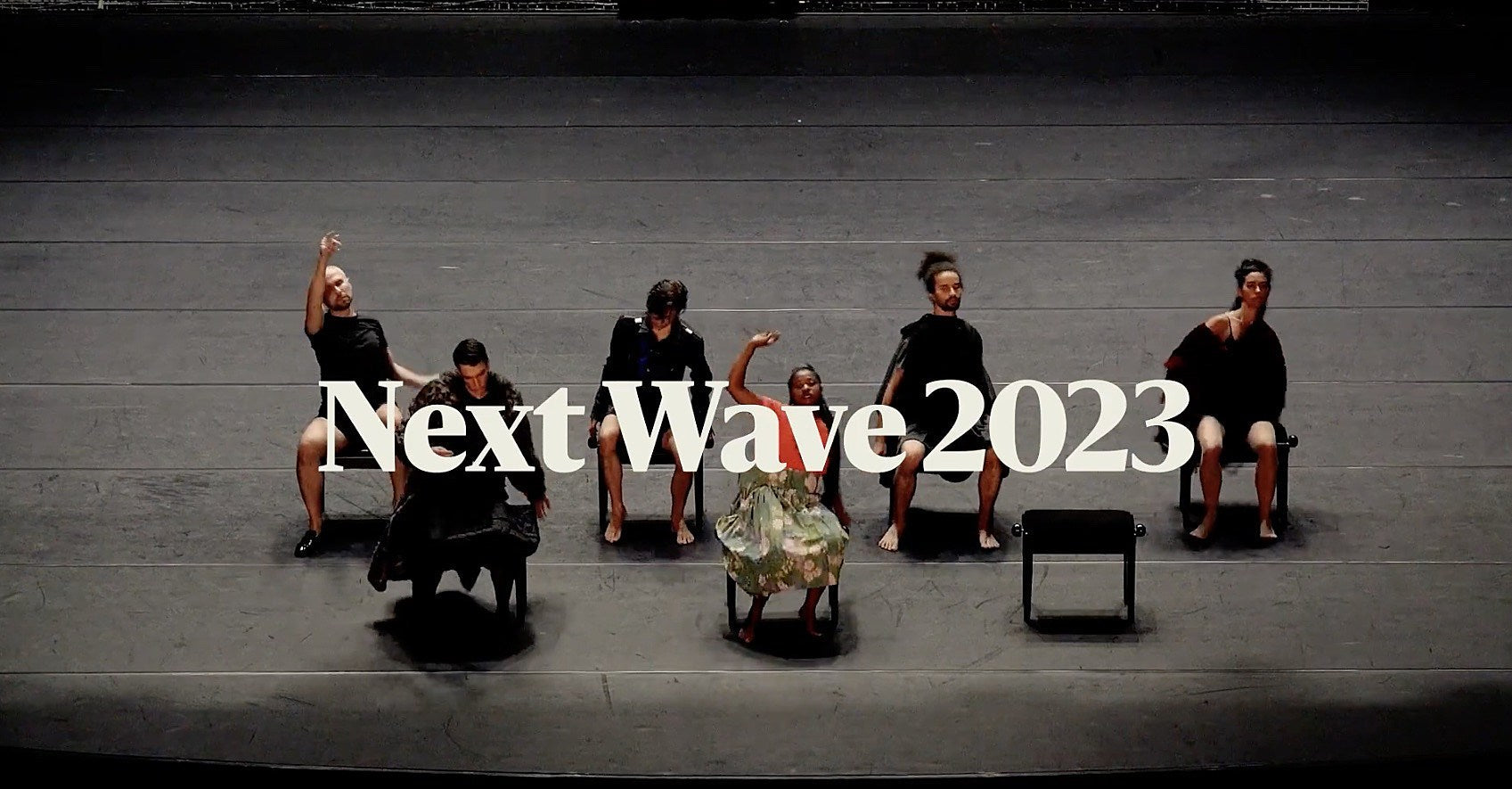

BAM has announced the lineup for their 2023 Next Wave Festival, which as usual includes theater, dance, and opera and runs October 19, 2023 – January 13, 2024. Tickets are on sale now for BAM Members and Patrons, and go on sale to the general public on July 11.
This year’s lineup includes the US premiere of HOW TO LIVE (after you die), a theater piece by Australian artist and filmmaker Lynette Wallworth and featuring music by ANOHNI. who also contributed the song “Rise” for Wallworth’s 2012 planetarium film CORAL REKINDLING VENUS.
There’s also: The Köln Concert, featuring music by Keith Jarrett and Joni Mitchell set to life by choreographer Trajal Harrell and the Schauspielhaus Zürich Dance Ensemble; South African dancer and choreographer Gregory Maqoma and composer Thuthuka Sibisi‘s Broken Chord; and more.
Check out the detailed 2023 BAM Next Wave lineup and schedule below, and head to the Next Wave site for more info.
BAM NEXT WAVE FESTIVAL 2023
Oct 19—21 – Broken Chord (Created by Gregory Maqoma and Thuthuka Sibisi)
Harvey Theater at BAM Strong
Internationally acclaimed South African dancer and choreographer Gregory Maqoma and composer Thuthuka Sibisi created a powerfully expressive retelling of South Africa’s first Black choir, The African Native Choir, which toured the US, England, and Canada in the late 1800s. The production bears the burden of the white gaze and what it feels like to move beyond its constraints. Maqoma and Sibisi weave together recorded personal accounts of the African Choir using atmospheric soundscapes, traditional Xhosa dance styles, and inspiration from that tour’s photography to reveal a drama that moves between concert, dance, and performance. Featuring a single dancer (Maqoma), four vocal soloists, and a live local choir (to be announced later), Broken Chord comments on urgent issues of migration, dispossession, borders, and paths of forced closure, raising important questions about the relationship between the colonized and the colonizer and either’s complicity in shaping and shifting a South African narrative — past and present.
Oct 27—29 – Corps extrêmes
BAM Howard Gilman Opera House
World-renowned choreographer Rachid Ouramdane comes to BAM for the first time with Corpsextrêmes, his new gravity-defying multimedia piece of aerial dance as part of the citywide Dance Reflections Festival. Powerful performers traverse the stage together and alone against the backdrop of an impressive climbing wall and beneath a long rope suspended high above them. Sometimes bathed in ethereal white light, and sometimes while footage of death-defying outdoor activities is projected above them, this is a study of the precipices of our world—both literal and figurative. As Jean-Baptiste Julien’s score unfolds, this sweeping, meditative work invites us to find calmness in the space between earth and sky. It’s a piece of staggering scale and vision and a work of interior physicality seeking escape; miraculous for its ability to bring about a jolt of adrenaline followed by an ebb of quietude.
Nov 2—18 – FOOD
BAM Fishman Space
FOOD is an intimate dinner party performance where acclaimed theater maker Geoff Sobelle uses smell, taste, touch and audience instruction to feed a meditation on the ways and whys of eating. The audience gathers around a gargantuan banquet table for a culinary experience that is at once common and strange, human and surreal, universal and personal. Combining rigorous design and stage illusion with an absurdist sense of humor, Sobelle pulls the audience directly into the mystery of how we find ourselves at this end of the salad bar. From the naked earth emerge herds of bison eclipsed by fields of wheat, blown by bowls of dust, buried undertrain-lines and subdivisions, crops and companies, farms and factories, plantations and superstores—all growing from the ground, spilling into kitchens, piling onto plates, and forked into your hungry mouth.
FOOD is the third of a trilogy of performance works at BAM (following The Object Lesson in 2013 and HOME in 2017) that explore the uncommon-ness of common themes. Each creates aplace for the audience to meditate on their personal relationships to a given subject…and ultimately find themselves at the center of the performance.
Nov 2—4 – The Köln Concert (Music by Keith Jarrett and Joni Mitchell)
Harvey Theater at the BAM Strong
One of the best-selling and most treasured solo piano recordings of all time, the timelessness ofKeith Jarrett’s The Köln Concert lies in its utter irreverence for genre. Its blistering, hour-longride through jazz, classical, blues, folk, and gospel, tied together by Jarrett’s remarkable melodic cleverness and sensitivity to space and dynamics, continues to marvel listeners almost 50 years later. Forced by back problems to wear a brace during the performance and played on a poorly tuned rehearsal piano with faulty pedals, Jarret’s performance is a testament to the artist’scapacity to seize beauty through adversity. This genre-agnostic soundtrack serves as the inspiration for American choreographer Trajal Harrell’s first foray onto the BAM stage. His boundary-pushing Schauspielhaus Zürich DanceEnsemble, itself known for blending seemingly disparate dance languages into dazzling visual spectacles, harnesses the piece’s tender majesty to deliver a message of unity and shared experience. The performance features Harrell’s carefully -selected costumes and fabrics inspired by developments in haute couture (which he sometimes uses on stage directly) and his highly personal style of movement, effectively turning his performers into unique and autonomous beings. Prefaced with four songs by Jarrett contemporary Joni Mitchell, The Köln Concert is an experience of unrestrained vulnerability, a reminder of the universal human need for closeness.
Nov 28—Dec 2 – adaku, part 1: the road opens
BAM Fishman Space
With her resonant voice and formidable intensity, Okwui Okpokwasili creates dance theater that stirs the senses and vibrates the soul, rooted as much in the power and precision of speech as in movement. In collaboration with her longtime partner, the director Peter Born, Okpokwasili has bucked convention by embracing the impromptu, running fearlessly towards the unknown, and establishing herself as “an expectation-confounding blend of authority and vulnerability” (The New York Times). Okpokwasili and Born make their lead artist BAM debut with their latest collaboration, adaku,part 1: the road opens, a new cross-disciplinary performance that finds them moving into a new stage of their artistic practice, crafting a thrumming, richly textured sonic and visual landscape. In this first chapter of a larger speculative mythology, a precolonial African village is on the cuspof a major upheaval. The community is entangled in an argument that could shape their future. Okpokwasili and the ensemble enact a collective reckoning that explores the role of ritual and the fraught relationship between ancestors and future generations, facilitating an intimate exchange between the performers and the audience.
Dec 7—9 – HOW TO LIVE (after you die)
Written, directed, and performed by Lynette Wallworth / Music by Anohni
BAM Fishman Space
Lynette Wallworth spent her early adulthood like any average person—acting as a Bible-interpreting prophetess in a radical Pentecostal community in Sydney. In her BAM debut, the Emmy Award-winning Australian artist deftly shifts her work from film to stage to share an incisive and deeply engrossing morality tale for our times—one in which she just happens to bethe protagonist. Using her medium-traversing works as touchstones, Wallworth sheds light on the seduction ofcultish extremism by recounting her own descent into an exclusionary, mind-warping belief system and her eventual escape through art. Giving voice to experiences she never intended to share, Wallworth confronts and responds with bold, bracing candor to the troubling rise of implausible conspiracy theories and the toxic alliance that sometimes emerges between theextreme edges of organized religion and fascist forces. HOW TO LIVE (after you die) finds amaster storyteller at the peak of her powers, pointing to the ways in which fanaticism can hold the imagination captive, unless we find the courage to reclaim the creation of our own life and story.
Jan 11—13 – Angel Island (Composed by Huang Ruo)
Harvey Theater at the BAM Strong
Starting in 1910, many immigrants who journeyed to America were processed at an immigration station on Angel Island, located in the middle of San Francisco Bay. Until a fire led to its closure in 1940, the station primarily functioned as a detention center, where half a million people from 80 countries were held under barbaric conditions — some for weeks, others for years. The majority of these detainees were Chinese migrants, who were banned from entering the United States under the Chinese Exclusion Act of 1882, with few exceptions. Making his BAM debut, acclaimed Chinese-American composer Huang Ruo revisits this chapter of American history in Angel Island – for Voices and String Quartet, a poignant multimedia experience that blurs the boundaries of opera and theater. In collaboration with the Del Sol Quartet, the Choir of Trinity Wall Street, and archival filmmaker Bill Morrison, Huang Ruo and director Matthew Ozawa weave a powerful requiem from the century-old poetry engraved on thedetention center’s walls by some of the hundreds of thousands of Chinese immigrants who were incarcerated and subjected to dehumanizing horrors. This production is a stirring plea for care and empathy as well as a visceral, clear-eyed tribute to the rebellion and resilience of those who passed through and perished at Angel Island.