
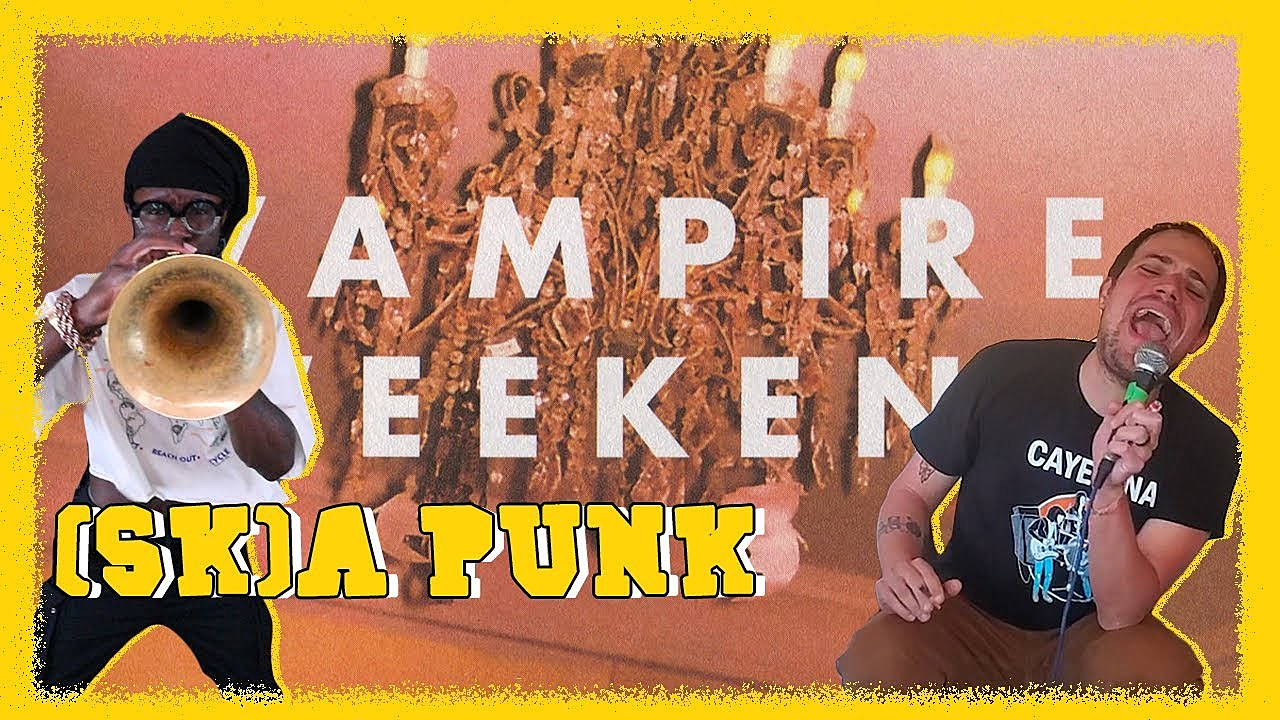

Jeremy Hunter, aka JER, has been doing awesome ska covers of non-ska songs with their Skatune Network project for a while now, although for its latest edition, they took on a track that’s already kind of considered a ska song — Vampire Weekend‘s 2008 hit “A-Punk.” Jeff Rosenstock joins the party for a dual horn attack, making this one even more of a must-watch. “The DREAM collab finally happened!!,” JER writes. “Some might say it’s a…… Ska Dream…..” Check out the cover below.
In other ska-related news, hyperska artist Eichlers have shared the second single, “99 Resolutionz,” off their new album My Checkered Future, due out March 25 via Bad Time Records (pre-order on limited edition electric blue vinyl). Tape Girl features on the vocoder-heavy track, which shouts out “emo cliches.” Hear it below, and pre-order My Checkered Future on electric blue vinyl, limited to 100 copies and exclusive to our stores, HERE.
My Checkered Future is also available as part of a Bad Time Records bundle with exclusive variants of the new Dissidente and Abraskadabra albums. Browse our Bad Time collection for more BTR titles.

—
12 Classic Ska-Punk Albums to Prepare You for the Ska-Punk Revival

Operation Ivy – Energy (1989)

The Mighty Mighty Bosstones – Don’t Know How to Party (1993)
I stand by giving Op Ivy the title of first and best, but if any band has the right to challenge them for the throne, it's The Mighty Mighty Bosstones. On the opposite side of the country, the Bosstones released their debut album Devil's Night Out the same year as Energy, and you can really credit those two albums for spearheading the ska-punk boom of the following decade. But while Op Ivy quickly broke up, the Bosstones kinda became the Bad Religion of ska-punk, lifers who helped create the genre, helped bring it to the mainstream, and stayed consistent as new generations of bands came and went. I mean, Dicky Barrett sang on The '59 Sound. These guys are in it for life.
Devil's Night Out helped usher in the ska-punk genre, and a few years later the Bosstones would be among the bands bringing it to the masses, thanks to their cameo in Clueless and their 1997 mainstream breakthrough Let's Face It (and its big single "the Impression That I Get"). But right smack in the middle of those things came their 1993 major label debut Don't Know How to Party, which found the sweet spot between their punk (and metal) roots and the radio-friendly band they'd become. And, for my money, it's their best record. It's home to "Someday I Suppose," which they play during their Clueless cameo and which proved they had as many pop songwriting chops in their arsenal as punk and metal riffs. It's not just as good a pop song as the Bosstones' later, higher-charting singles; it's better. And it's not alone on Don't Know How to Party. The title track and "Almost Anything Goes" proved the pop smarts of "Someday I Suppose" were no fluke, and hinted at the big breakthrough the band would soon have. At the same time, the Headbanger's Ball-worthy "Last Dead Mouse" and the thrashy "A Man Without" keep Don't Know How to Party separate from the tamer bands that the Bosstones influenced. Not to mention, Bad Brains' Darryl Jenifer guests on this record, so it's got punk cred just for that. It's the best of both worlds.

Citizen Fish – Flinch (1994)

Voodoo Glow Skulls – Firme (1995)

The Suicide Machines – Destruction by Definition (1996)

Less Than Jake – Losing Streak (1996)

Slapstick – Slapstick (1997)

Catch 22 – Keasbey Nights (1998)
Just months after East Brunswick, NJ's Catch 22 released their 1998 debut album Keasbey Nights (on Victory Records, a label then primarily known for metalcore), frontman Tomas Kalnoky and bassist Josh Ansley left the band, soon to be followed by trombonist James Egan. Catch 22 started shuffling around their lineup, and eventually Tomas, Josh, and James formed Streetlight Manifesto (who re-recorded their own version of Keasbey Nights in 2006). Both bands went on to do worthwhile stuff, but nothing ever captured the magic of the original, eternally great Keasbey Nights. At the risk of sounding too hyperbolic, this album is like the true heir to Operation Ivy's throne. Like that band, Keasbey Nights sounds thin and scratchy and rough around the edges, but it's perfect the way it is. And like Op Ivy, Keasbey Nights shows off a true love and understanding of ska, while also sticking to a true punk mentality. The bands on this list all found various ways to bring ska and punk together; Keasbey Nights fused them to the point where the lines between them ceased to exist.
The rhythms were rooted in ska more often than not, but the speed was full-on punk. Keasbey Nights is such a fast record that it has several songs where it sounds like Tomas and his bandmates can hardly finish their sentences, but everything always sounds intentional and under control. It's dizzying to try to keep up with them, but the opposite of inaccessible. Tomas packs an insane amount of hooks into these songs; I don't even know if the album technically has a "single" but it feels like a greatest hits. Nearly every track on Keasbey Nights is a stone-cold ska-punk classic, and the album flows brilliantly and never suffers from filler. Sometimes liking ska-punk requires you to embrace a little cheese or a little '90s datedness, but there's nothing cheesy or dated about this near-perfect record.

Rancid – Life Won’t Wait (1998)

Choking Victim – No Gods, No Managers (1999)

Leftover Crack – Fuck World Trade (2004)
