
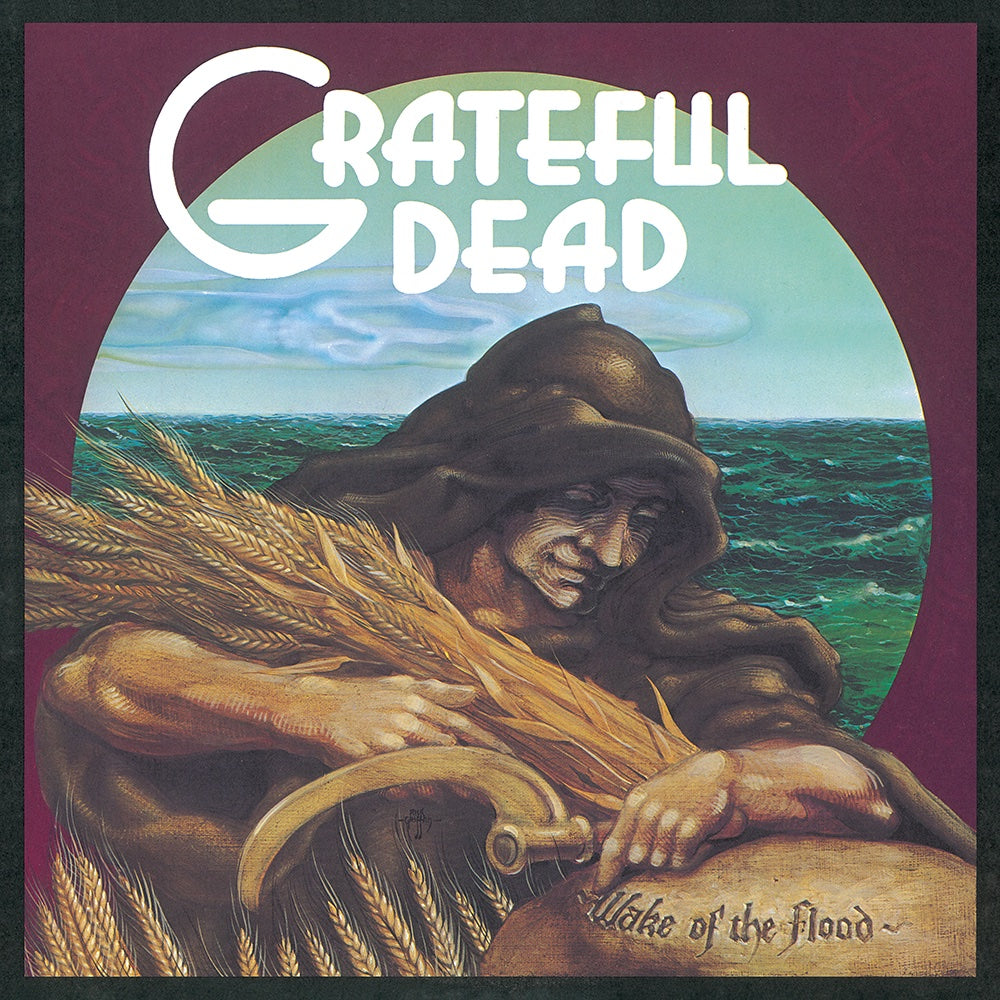
The Grateful Dead‘s Wake of the Flood turns 50 this fall, and to celebrate, the band is putting out a 50th anniversary edition on September 29 via Rhino. The album’s been remastered for the reissue, and it features new liner notes, two previously unreleased demos, and a second disc with a recording of the Dead’s 11/1/73 McGaw Memorial Hall show at Northwestern University in Evanston, IL. Along with the announcement comes a demo for “Eyes of the World.” Grateful Dead Legacy Manager and Audio Archivist David Lemieux says:
In early 1973, just before the Grateful Dead performed on February 9, Jerry Garcia recorded demos of the new songs he and Robert Hunter had been creating. These demos featured Jerry doing the singing and playing, and he presumably shared them with the band members so they could start learning the new songs. Amongst these demos was this beautiful Eyes Of The World, providing the basis of what would become one of the Dead’s most beloved and frequently played songs for the next 20+ years.
It’s a very primitive, very tender version of the song, and it’s a real treat to hear this classic performed in a way that you (probably) never have before. Check it out below.
Also launched today is the eighth season of Good Ol’ Grateful Deadcast, which focuses on the Wake of the Flood era. The first episode features never-before-heard interviews with Dead (and Rolling Stones) tour manager Sam Cutler about the famed Watkins Glen Summer Jam. Listen to that below as well.
In other news, Yankee Stadium is giving away free Jerry Garcia bobbleheads in August. Bob Weir’s band Wolf Bros and Bill Kreutzmann’s band Billy & the Kids also both have upcoming shows.
Tracklist
DISC ONE
Mississippi Half-Step Uptown Toodeloo
Let Me Sing Your Blues Away
Row Jimmy
Stella Blue
Here Comes Sunshine
Eyes Of The World
Weather Report Suite
Eyes Of The World (Demo)*
Here Comes Sunshine (Demo)*
DISC TWO*
MCGAW MEMORIAL HALL, NORTHWESTERN UNIVERSITY EVANSTON, IL (11/1/73)
Weather Report Suite
Morning Dew
Playing In The Band
Uncle John’s Band
Playing In The Band
Mississippi Half-Step Uptown Toodeloo
*Previously Unreleased
—
See where Wake of the Flood falls in our ranking of the Grateful Dead’s studio albums:
—
Grateful Dead Studio Albums Ranked Worst to Best
The Grateful Dead are a career band, one that you could never fully
understand from one song or even from one album, so it's
understandable that Deadheads turned their noses up at people who
jumped on the Dead's bandwagon after "Touch of Grey" came out
("Touchheads," they called them). Deadheads could probably fill a
90-minute cassette with Grateful Dead songs that deserved to be hits,
but "Touch of Grey" was the first and only time the Dead actually
scored a Top 40 hit (it actually cracked the Top 10), so, naturally,
it gained them a sizable amount of new fans and pissed off a bunch of
old ones. It's sort of a condensed, easily accessible version of what
the Dead had done more effectively many times in the past, and it
is weird and disappointing to think it took mainstream America
so long to catch on to a Grateful Dead single. (As I'll get into many
times during this list, the Dead had a brilliant sense of pop
songwriting, one that often rivaled their more chart-friendly
contemporaries.) So I get all the cynicism surrounding "Touch of
Grey," but, now that it's been over thirty years and hopefully we've
all grown out of calling each other poseurs, it feels safe to admit
that "Touch of Grey" is a pretty fucking great song. It's irresistibly
catchy and danceable, and, in the context of music today, it actually
sounds less corny and less dated than even some of the Dead's '70s
material. Modern-day indie rock leaders The War On Drugs have a
handful of songs that sound modeled after "Touch of Grey," and I doubt
they'd deny this -- they covered
"Touch of Grey" for the 2016 indie
rock Dead tribute album. It shouldn't be their biggest studio
song, but it really is one of their best.
"Touch of Grey" is the first song on In the Dark, and it goes
drastically downhill from there. Save for "Black Muddy River" (another
of Jerry's pleasant late-career ballads), the album is entirely in
dated, overproduced, commercial rock territory. When ranking this
list, it was kind of a tossup between In the Dark and Go to
Heaven, as both have just one great song each, and while "Althea"
sounds more like classic Dead, "Touch of Grey" gives In the
Dark just a slight edge over its predecessor. The Grateful Dead hit a commercial peak with 1970's Workingman's
Dead and American Beauty, yet those would prove to be the
band's last albums on major label Warner Bros. They didn't release
another studio album until leaving Warner in 1973 and starting their
own label, and instead they filled the gap with three live albums and
solo debuts by co-frontmen Jerry Garcia and Bob Weir. (The same year
as Jerry and Bobby's albums, Warner also released Rolling
Thunder, the solo debut by drummer Mickey Hart, who was currently
on hiatus from the band. The album features most members of the
Grateful Dead, plus members of Jefferson Airplane, Quicksilver
Messenger Service, Tower of Power, Stephen Stills, and more, and it
includes versions of two major Dead tunes which also exist in
better-known form on Bob Weir's Ace.) Jerry and Bobby's albums
include several songs the Dead had already been performing, and which
would remain Dead staples through the end of the band's career, and
Bobby's album really was a Grateful Dead album in everything
but name (it was entirely recorded by the then-current lineup of the
Grateful Dead, except Pigpen whose health was in bad shape), so it
felt important to include these two albums on a list of the band's
studio work. (Again, there are many other Dead-related studio
albums that exist, and no disrespect is meant to those albums.)
Jerry was really the band's core (and best) songwriter, but Bobby had
already written at least a couple classics by 1972 ("The Other One,"
"Sugar Magnolia"), so he was more than ready to pen an entire album
(with help from Dead lyricists John Barlow and Robert Hunter). Seven
of Ace's eight songs became (or already were) Dead staples, and
some are among the band's biggest crowdpleasers -- not bad for The
Other One's first solo move. What Bobby lacked on Ace, though,
was the knack for psychedelia that the Dead are so famous for.
Workingman's Dead and American Beauty saw them easing up
on the sonic acid trips, but no Dead album at the time had been as
sober as Ace. The only moments that really take you there are
the instrumental passages in "Playing in the Band," which is also why
that song is usually superior in concert, when the band can really
lean into those instrumental passages and take them in all kinds of
exciting directions. "Playing in the Band" is the album's most iconic
song, but its most interesting song is album closer "Cassidy."
Keyboardist Keith Godchaux and backup singer Donna Jean Godchaux made
their in-studio debut with Grateful Dead proper on 1973's Wake of
the Flood, but they had been playing live with them at the time of
Ace and both recorded on this album, and Donna harmonizing with
Bobby on "Cassidy" makes for the album's most gorgeous moments.
"Cassidy" is also a slightly more haunting song than the rest of
Ace, and the less jubilant tone makes it feel a little more
timeless. As far as the album's more traditional sounding songs go,
the blues-rockin' "Greatest Story Ever Told" and "One More Saturday
Night" are standouts that really show Bobby was turning into a pretty
commanding songwriter. But his most impressive songwriting was still
yet to come. Shakedown Street came one year after Terrapin Station,
and it continued the shift towards Disco Dead that began on that
album, particularly on the iconic title track. With a funky groove, a
fat, rubbery guitar riff, the singalong hooks, and especially the
shoutalong "whoo!", "Shakedown Street" became a favorite among
Deadheads, despite (often misguided) resistance against disco by rock
fans at the time. It's more effective in a live setting, especially
because of the satisfaction the crowd gets when the Dead land back on
the verse after extended jamming, but it's in fine form on this album
too. It's got the shiny production that this kind of song needs but
it's not overproduced, and Jerry's voice and the background
harmonies are as smooth as can be (in a good way). The same way the
Stones kept their rock swagger intact when they went disco on "Miss
You," Jerry manages to still sound like the mythical musical creature
he was during the psychedelic era.
Another thing Shakedown Street has in common with Terrapin
Station is that it suffers from giving then-contemporary-sounding
(and now very dated) reworks to covers that had been in the band's
repertoire since the '60s. On Shakedown Street, they open with
a radio-ready, Bob Weir-sung version of The Young Rascals' "Good
Lovin'" (which Pigpen sang at shows back in the day), and a hard rock
rework of Noah Lewis' old blues tune "Minglewood Blues" (here retitled
"All New Minglewood Blues"), which the Dead had already covered on
their 1967 debut album. Were they too busy touring to care as much
about completing an album, or just out of ideas? No complaints that
the Dead kept those songs in their live repertoire, but in the context
of Shakedown Street, they just bring the album down. (If they
were going to repurpose material from the old days, couldn't they have
at least recorded one of the beloved originals from Europe '72
and Skull & Roses that never made it onto a studio album?)
For all its shortcomings, Shakedown Street had a few other
magical moments besides its title track. The most magical is "Fire on
the Mountain," which would become a major highlight of the Dead's
concerts when paired with "Scarlet Begonias" from 1974's From the
Mars Hotel (more on this below in the From the Mars Hotel
section), but it's a highlight of Shakedown Street too. Like
"Scarlet Begonias" and "Franklin's Tower" before it, it's got a
reggae-ish groove and one of the catchiest Jerry-sung choruses the
Dead ever wrote (though this one was actually written by drummer
Mickey Hart, not Jerry, with lyrics by Jerry's usual collaborator
Robert Hunter). Shakedown Street also birthed Bob Weir and John
Barlow's "I Need A Miracle." It's not one of the best sounding
studio songs, but -- like the
album title -- "I Need A Miracle" became a key
part of Grateful Dead culture. The album was also home to two
perfectly fine, pretty-sounding Garcia/Hunter compositions, "Stagger
Lee" (based on the traditional folk song, not a cover of it) and "If I
Had the World to Give." The Dead were touring a lot in 1974, and it was their most tiring
period as a touring band since that was the year they were using their
massive Wall
of Sound speaker system which required a lot of time to set up and
break down. Possibly due to fatigue or time constraints, From the
Mars Hotel is a modest, straightforward album as far as the Dead's
mid-'70s studio albums go. It's got some filler -- songs like "U.S.
Blues," "Loose Lucy," and "Money Money" either sound dated upon
arrival, silly, or both -- but it still made for some fine Dead studio
moments. It's got a few songs that proved the Dead still had some of
that early '70s folk rock left in them: Jerry's sleepy "China Doll"
and "Ship of Fools" are as lovely as some of his American
Beauty/Workingman's Dead moments, and they let Phil sing twice
this time around. Neither is as majestic as "Box of Rain," but,
co-writing with poet Robert M. Petersen, Phil contributed two of
From the Mars Hotel's finest moments, "Unbroken Chain" and
"Pride of Cucamonga." The almost-seven-minute "Unbroken Chain"
combines the delicate folk stylings of American Beauty with the
harder rocking and jammier elements of the band's live show (and adds
a little synthesizer in too), and it's one of the album's highest
peaks. "Pride of Cucamonga" is more humble, but gives the album a nice
dose of rollicking twang.
The most essential moment of From the Mars Hotel, though, is
"Scarlet Begonias." "Scarlet Begonias" would become one of the band's
most legendary live songs, once -- starting on March 18, 1977 at the
Winterland Arena
-- they began pairing it with "Fire on the Mountain" (released in
studio form on 1978's Shakedown Street) and created "Scarlet
> Fire." The best version of this song may very well be the
"Scarlet > Fire" from the band's fabled 5/8/77 show at
Cornell University, but the studio version of "Scarlet Begonias"
still remains a beast of its own. As much as the song takes on a new
life in concert, there's something about hearing it with the crisp yet
not too polished production of From the Mars Hotel (and at an
economical four-ish minutes) that really makes the song shine. It's an
irresistible dose of funky rock that really livens up From the Mars
Hotel, and that sets the tone for future funky rock Grateful Dead
songs to come, like, well, "Fire on the Mountain." It gifts the album
with its strongest hooks, and one of the band's most memorably
psychedelic (or psychedelically memorable?) images ("the sky was
yellow and the sun was blue"). It's the only song like it on From
the Mars Hotel, and it's strong enough to bump the whole album up
a slot or two on lists like these. As a live band, The Grateful Dead were refreshed in 1977, and many
Deadheads consider it one of their best years (peaking with that 5/8/77 Cornell
show). They were back on the road after taking a bit of a hiatus
in 1976 (which saw the release of the Steal Your Face live
album and Jerry's solo album Reflections, which featured the
Dead on four of its eight songs), they were no longer weighed down by
their Wall of Sound speaker system, and they were just really gelling
on stage that year. 1977 also saw the release of the Dead's first
studio album in two years, Terrapin Station. It's a great
album, but it's not quite as flawless as the band's live shows were
that year.
Terrapin Station has an unnecessary disco-fied version of the
Motown classic "Dancin' in the Streets," which had been in the Dead's
live setlists since the '60s, and other skippable songs like Bob
Weir's arrangement of the traditional "Samson & Delilah" and the
cheesy hard rock of "Passenger." (It's been said
that the more commercial side of this album was the influence of
producer Keith Olsen, who had helmed Fleetwood
Mac's first album with Stevie Nicks and Lindsey Buckingham prior
to working with the Dead.) Side A is saved by the overcast funk groove
of "Estimated Prophet," one of Bob Weir's finest contributions to the
band's disco-inspired output, but the real reason that Terrapin
Station ranks as high in the band's discography as it does is the
titular suite, which takes up the entirety of Side B.
There are a lot of Dead songs that didn't reach their full potential
until they were heard in concert, but the "Terrapin Station" suite was
the opposite. Parts of "Terrapin" have been performed live, but the
Dead never played the entire thing from start to finish, and they
certainly didn't play it with the orchestra or the choir that's on the
album version. Apparently, members of the band disagreed with the
extravagant arrangements that Keith Olsen commissioned for the song,
but if that's true, I'm going to have to respectfully disagree with
them. "Terrapin" is the single most awe-inspiring song in the
Grateful Dead's catalog, and that is thanks in no small part to all of
its grand embellishments. It sounds like someone mashed Sgt.
Pepper's and Aqualung together into one 16-minute song, but
it also sounds like no one other than the Dead. The weirdo acid-trip
passages are there, the Rhythm Devils are going wild, and Jerry leads
the way with the same presence he had since the late '60s. Songwriting
wise, Jerry hit a major peak on this one. Even if you stripped all the
fancy stuff away and listened to him play the song on an acoustic
guitar, it would rank among the band's finest moments. It's lengthy,
orchestral prog rock, but it avoids being too bombastic or too complex
for complexity's sake, because Jerry's songwriting still manages to
sound humble and mellow -- it's much closer to his late '60s / early
'70s songwriting peak than to the late '70s radio rock and disco
leanings of Terrapin Station's first half. And the song is long
but all the parts are tightly packaged together; it never drags or
overstays its welcome. It's the moment where the band's pop
songwriting, ambitious arrangements, and impeccable musicianship came
together better than ever before or since, and not a second of the
song is wasted. If you're still wary of the Grateful Dead's studio
work but you haven't heard this song, do yourself a favor and change
that. "Terrapin Station" is a triumph far beyond the context of "jam
bands." Taken even in the context of The Beatles, Bowie, or Pink
Floyd, it's a triumph in pop songcraft and studio wizardry. Keyboardist/vocalist Pigpen's ailing health started to affect his
ability to tour in 1971, at which point Keith Godchaux, alongside his
wife and vocalist Donna Jean Godchaux, had been brought into the
Grateful Dead. Keith first played as a temporary replacement for
Pigpen, and then both musicians toured with the Dead simultaneously,
but eventually Pigpen's health problems forced him to retire for good
in 1972. In early 1973, he sadly passed, making Wake of the
Flood the first Grateful Dead album with the Godchauxs and the
first without Pigpen. It was also the band's first album since their
1967 debut without second drummer Mickey Hart, who was on hiatus from
the Dead at the time. The Godchauxs brought new sounds and new
influences to the Dead, and that's immediately evident on Wake of
the Flood. Keith's keyboard playing was more inspired by jazz than
Pigpen's bluesy sound, and Donna gave the Dead powerhouse backing
vocals for the first time in their career. Keith also offered up the
first (and ultimately only) Grateful Dead song he wrote himself and
sung lead on, "Let Me Sing Your Blues Away."
Coming after American Beauty/Workingman's Dead, which is widely
regarded as the band's in-studio peak, Wake of the Flood can
seem like a bit of a letdown. Unlike its two predecessors, it didn't
produce any charting singles, and it's got its shruggier moments. "Let
Me Sing Your Blues Away" isn't much to write home about, and neither
is the Jerry-sung opener "Mississippi Half-Step Uptown Toodleoo." For
the Dead's standards, they're just a little... regular. But
Wake of the Flood's highs can be very high, and they make up
for the album being less rock-solid than American Beauty.
Though it lacked a big single in the real world, the jazz-rockin'
"Eyes of the World" is about as big as it gets in the Deadhead world.
It's a live staple and it's often stretched to twice its length at
shows, but this studio version shines too. The iconic rhythm guitar
pattern and the arresting chorus are as dazzling on Wake of the
Flood as they are in just about any live recording. Another
Wake of the Flood song that deserved a bigger real-world
breakthrough is "Row Jimmy." Singing and songwriting wise, it's got a
similar traditional Americana vibe to American Beauty/Workingman's
Dead, but it's also got a reggae-ish hop in its otherwise
laid-back step, and at over seven minutes in length, it finds a little
more room for the jammy tendencies of the band's live show than
American Beauty/Workingman's Dead does. The atmospheric psych
ballad "Stella Blue" is a gorgeous deep cut, and the Beatlesque
harmonies of "Here Comes Sunshine" remind you that American
Beauty and Workingman's Dead aren't the only albums where
the Dead's harmony singing was airtight.
And then there's "Weather Report Suite." The almost-thirteen-minute,
Bob Weir-penned Wake of the Flood closer came just one year
after Bobby's solo debut Ace, and it's a far more impressive
composition than anything on that album. The Dead did a lot of
interesting stuff in the studio, and among the most interesting -- up
there with the '60s psych experiments and the 1970 folk songwriting --
are the multi-part prog suites they released in the mid to late '70s.
The first of these was "Weather Report Suite." It starts out as gentle
folk rock that isn't super different from Workingman's
Dead/American Beauty/Ace, with some nice organ, pedal steel, and
truly angelic harmonies fleshing things out. Then new things start to
come in. First gospel harmonies, and then it changes even more, when
it switches from its lazy-Sunday first half to the more
sinister-sounding "Let It Grow" portion. Keith Godchaux starts
pounding on his piano, and Bob Weir finds his voice as a pop
songwriter more than he ever had previously. Then enters the
triumphant horns and strings, and it becomes even clearer that the
Grateful Dead are in territory they had never been in before 1973.
They were known for "long songs" because of the way they stretched out
their jams live, but this wasn't jamming. This was an orchestral rock
song cycle than rivaled Tommy and side B of Abbey Road,
both in ambition and in how fun it is to listen to. This side of the
Dead is an often unsung part of their legacy, and it deserves to be
much more widely celebrated. Usually a constantly-busy live band, the Grateful Dead played just
four shows in 1975, and rather than laying road-tested songs to tape
as they often did, the Dead went into the studio for Blues for
Allah and wrote from scratch. The time off from touring and the
new approach to writing and recording may have contributed to the
amount of detail and care that went into Blues for Allah. It
was the first time the Dead were firing on all cylinders in the studio
since their nearly-flawless 1970 albums, and ultimately -- though a
good amount of in-studio magic was created in subsequent years -- the
last. The jazz influence that had crept into the Dead's studio work on
Wake of the Flood was very strong at this point, and resulted
in full-blown jazz fusion like the instrumental "King Solomon's
Marbles." The folk rock sound of the band's early '70s era was mostly
untraceable, but the psychedelic sound of the late '60s era was
stronger on Blues for Allah than it had been on any Dead album
since the turn of the decade. "The Music Never Stopped" is probably
the closest the album comes to sounding "traditional" in any sense of
the word; otherwise, Blues for Allah is totally in its own
world. That's immediately evident on opener "Help on the Way /
Slipknot!," which was like little else the band had done before or
since. It sounds like a blender full of the band's
then-increasingly-prevalent jazz tendencies, the exploratory jams of
their live show, and the trippy acid rock that they helped pioneer,
yet it still manages to be a cohesive pop song. The instrumental
passages may go off into outer space, but Jerry's calmly addictive
refrains always keep the song coming back to down to Earth. It's got
the kind of wet, spacious production that bands like Grizzly Bear
favor today, with chilled-out keys and vocal harmonies that do a lot
to fill the song's atmosphere.
"Help on the Way / Slipknot!" is already two songs rolled into one,
and then -- as the band would do live many times -- they transition
seamlessly into track two, "Franklin's Tower," without a moment of
pause. Following somewhat in the footsteps of "Eyes of the World" from
Wake of the Flood, "Franklin's Tower" is sort of a reggae/jazz
rock blend, with a real groove and one of the most memorable,
singalongable choruses of the band's career. As soon as that groove
locks in after the jammy ending of "Slipknot!", it's one of Studio
Dead's finest reenactments of when Live Dead morphs one song into
another right before your eyes. Though less memorable, "Crazy Fingers"
is another dose of reggae-psych along the lines of "Franklin's Tower,"
and an even clearer example of the way Blues for Allah blends
genres. Sometimes it sounds like traditional reggae, other times it
sounds almost like late '60s Beatles, and it makes the lines between
those two sounds look a lot blurrier than you'd ever expect. After the
charming, Bob Weir-penned, acoustic-guitar-and-flute instrumental
"Sage & Spirit," Blues for Allah ends with another of the
Dead's showstopping prog suites, "Blues for Allah / Sand Castles &
Glass Camels / Unusual Occurrences In the Desert." The title-ish track
is also the most overtly psychedelic song the Dead had released since
Aoxomoxoa. It's got it all: creepy, Eastern-inspired vocal
harmonies (and lyrics), instrumental parts that literally sound like a
bad acid trip, background noises that sound like a rainforest, and the
trancelike repetition of "under eternity" that gives The Beach Boys'
home-recorded
era a run for its money. Turn this one up, close your eyes, and you'll
see how no one could recreate the psychedelic experience like the
Grateful Dead could. Workingman's Dead and American Beauty came out the same
year within months of each other, and they're really two parts of an
inseparable whole. It almost feels weird to rank them separately, as
they achieved the same things (commercial success, better singing) and
you can't have one without the other. But, if we're ranking them,
American Beauty has the edge. Workingman's Dead is of
course no slouch, though, and some of its songs are as good or better
than American Beauty's best songs.
Like many other bands did after the '60s ended, the Grateful Dead
ditched the overtly psychedelic studio production as they entered the
'70s (but their live shows were still as conducive to dropping acid as
could be), and the first result of this was the folk rock of
Workingman's Dead. More than on any Dead album before it, good
songwriting and good singing was the goal on Workingman's Dead,
and the Dead proved that they could achieve that goal for the length
of an entire album. As seen in recent Dead film Long
Strange Trip, Jerry really pushed the band to nail their vocal
harmonies during this era, and his efforts paid off. The Grateful Dead
are dizzying instrumentalists, but singing was never their strongest
point, so when you first heard those lush harmonies in Workingman's
Dead opener "Uncle John's Band," you knew these guys were in
previously unchartered territory. That song is such a big singalong at
live shows that you hardly need to pay attention to how the band is
playing it on stage, but hearing it in the stripped-down form it's in
on Workingman's Dead, with so much attention to detail in the
harmonies, is truly a treat.
Though American Beauty is overall stronger than Workingman's
Dead, my favorite song from the band's 1970 folk rock era is on
this album: "Dire Wolf." Jerry Garcia and Robert Hunter's lyrics sound
like an old folktale, and Jerry applies one of the sweetest melodies
of his career to these words. This era of the Dead is frequently
compared to Crosby, Stills, Nash & Young, and I think even the guys in
that band -- or at least David Crosby -- would've loved to have
written this song. "New Speedway Boogie," a subdued blues rocker
that's irresistible to sing along to, is both a live and a studio
favorite. In the context of Workingman's Dead, it really
shines. Those three songs feel so massive, that you can almost forget
about the gorgeously delicate folk of "High Time" sandwiched between
them on the album's A side. If there's one thing putting
Workingman's Dead just a bit behind American Beauty,
it's that side B drags just a tiny bit... that is until album closer
"Casey Jones." With its "driving that train, high on cocaine" refrain,
it's one of the band's biggest and most memorable songs amongst
non-Deadheads, yet that doesn't taint the song's legacy one bit. It's
just a little funkier than the rest of the album, which puts a welcome
hop in Workingman's Dead's step, and Jerry's voice is at its
most pristine on this one. It's an awesome way to wrap up the album,
and it perfectly sets the tone for American Beauty. As mentioned above when I was talking about Bob Weir's Ace, the
Grateful Dead filled the gap between their 1970 and 1973 studio albums
(and fulfilled their contract with Warner) by releasing three live
albums and the solo debuts by co-frontmen Jerry Garcia and Bob Weir.
Ace really was a Grateful Dead album in everything but
name, but Garcia was more technically "solo." As he did in the
Dead, Jerry wrote his lyrics with collaborator Robert Hunter, and he
brought in Dead drummer Bill Kreutzmann, but Jerry played everything
else (vocals, guitars, bass, pedal steel, keys, etc) himself.
Workingman's Dead and American Beauty are generally
considered the band's best studio albums and their most "songwriter"
albums, but Garcia and Ace were cut from a similar cloth
and deserve to be mentioned in that same breath, especially
Garcia. Jerry's singing and songwriting on this album is at
least as strong as it is on Workingman's Dead and American
Beauty; American Beauty may have showcased the different
members' various strengths as singers and songwriters, but if you want
a whole album like "Ripple" and "Friend of the Devil," there's a good
argument to be made that Garcia is that album. The production
is also a little more interesting on this album. The stripped-down,
earthy vibe of Workingman's Dead and American Beauty is
perfect, but the more electricified, more psychedelic Garcia
shakes things up a bit compared to those albums (and compared to
Ace). It's almost like the middle ground between American
Beauty/Workingman's Dead and the more song-oriented moments of
Aoxomoxoa, and that's a very exciting thing.
The four songs on side A are all staples at Grateful Dead concerts,
and they all sound especially vibrant on Garcia. Folk rockin'
opener "Deal" eases you into the album in a way that's not miles away
from American Beauty. The "don't you let that deal go down"
refrain is one of Jerry's most immediate hooks, and his overdriven
pedal steel makes it clear that we're in slightly harder-edged
territory than American Beauty. Once you've figured that out,
Jerry hits you with "Bird Song," a harder and more psychedelic rocker
than anything the Dead had done since the '60s. The main guitar riff
is hypnotic, and the atmosphere that surrounds it on this recording
makes it even more mesmerizing. Later in the song, when Jerry brings
in droning organs and the kind of acid rock soloing he did at the
Dead's live shows, you're more inspired to turn on, tune in, and drop
out than you would be from anything on American Beauty. Then
it's "Sugaree," which the Dead had already been performing before
Garcia came out, and which went on to be one of their most
beloved songs. There are some incredible live versions of
"Sugaree," like the nearly-20-minute one from Hartford -
5/28/77, but it's also magical as a six-minute studio song. With
jangly acoustic guitar in the background, and lightly effected
electric guitar making things a little psychedelic in the foreground,
the Garcia version sounds bright and spacious, and Jerry's
"shake it, shake it, Sugaree" hook is among his finest pop moments.
Side A wraps up on a similarly folky note to the one it started on,
but instead of upbeat and twangy, it's the melancholic, gently
head-nodding "Loser." As he sings another of Robert Hunter's
classic-Americana-style tales, Jerry gives a performance that's among
his most heartfelt.
Then side B rolls around and the run of "Late For Supper,"
"Spidergawd," and "Eep Hour" offers up the kind of trippy studio
experimentation that Anthem of the Sun and Aoxomoxoa are
known for. Jerry pulls you out of the haze with the somber,
piano-driven "To Lay Me Down," another of his strongest ballads, and
then after a short interlude, Garcia ends with an all-time Dead
classic, "The Wheel." With its lightly psychedelic intro, searing
pedal steel, and Jerry singing his own harmonies on the song's
should've-been-a-hit chorus, "The Wheel" is a tremendous way to end an
album. As written above, American Beauty came just months after
Workingman's Dead and was cut from a very similar cloth, but
it's a noticeable step up. The production is more lush, and there are
more stunningly good pop moments. Workingman's Dead has "Casey
Jones" and "Uncle John's Band," but American Beauty has "Friend
of the Devil" and "Truckin'" and "Sugar Magnolia" and of
course "Ripple." And even the songs that are less accessible/popular
are just as iconic. It opens on one of its finest notes, "Box of
Rain," a rare moment where Phil Lesh sings lead, and as is abundantly
clear here (and as the "Let Phil sing!" chanters already know), Phil
has a gorgeous voice and it really is a shame he didn't take lead
more. He's probably the band's second most appealing singer after
Jerry, and the timeless "Box of Rain" is some of the best evidence of
this. "Box of Rain" gets immediately followed by one of the band's
most memorable songs and one that's more suited for the studio than
the stage, "Friend of the Devil." The overlapping acoustic guitar
riffs in the beginning, the gently rollicking rhythms -- it could
never quite be recreated live with electric guitars. Not to mention
it's one of the Dead's most captivating stories lyrically, and Jerry
gives a legendary vocal performance of it on American Beauty.
Immediately after that is one that can be better live, the Bob
Weir-sung "Sugar Magnolia." The slightly more rockin' version of this
song that the band tended to do live is one of their biggest
crowdpleasers, but hearing in it its American Beauty form is a
treat too. The rich harmonies on this version really shine. If
American Beauty has one weak link, it's the next song,
"Operator." Pigpen, may he rest in peace, is a legend, and the Dead's
best years were with him, but, especially in the context of this album
and in the context of rock music in general in 1970, his bluesy
delivery makes the song sound dated in a way that nothing else on
American Beauty does.
The album picks right back up after that, with Jerry's gently folky
"Candyman," and then side B is nearly perfect. The second half of the
album begins with "Ripple," the Dead's finest campfire singalong and a
rare favorite among Deadheads and non-Deadheads alike. Even more so
than "Friend of the Devil" or "Casey Jones," "Ripple" feels like a
folk music standard today, the way so many of (Grateful Dead
collaborator) Bob Dylan's songs do. The "La da da da" part is as
second nature to multiple generations of rock music fans as the "Na na
na na na" part of The Beatles' "Hey Jude." You don't have to care
about drum solos, acid tests, or tape trading to be won over by the
charms of "Ripple" -- it's a universal classic. On American
Beauty, it's followed by a more low-key classic, "Brokedown
Palace." Not as iconic as "Ripple" among non-Deadheads but maybe even
more iconic among Deadheads, "Brokedown Palace" is the comedown you
need after the psychedelic experience of a Dead show, and as a result,
the Dead was known to close with it. It emerges as some of the band's
best pop songwriting when an entire stadium sings along to it, but
it's presented subtly on American Beauty. The gentle album
version sees the band practicing much restraint, which makes it even
more impressive that an anthemic pop song managed to poke its head out
anyway. It may be known to end live shows, but it doesn't end
American Beauty, and on the album, you're quickly awakened by
the upbeat "Till the Morning Comes," an addictive dose of folk-pop
that rivals "Box of Rain" and "Friend of the Devil" in effectiveness,
even if not in popularity. Then it's another comedown with the airy
"Attics of My Life," where the group's harmonies are angelic, and
finally "Truckin'," a song so deceptively simple that it can almost
seem underwhelming at first, until you realize it's drilled its way
into your brain. Not to mention it produced the since-immortalized
line, "What a long strange trip it's been." It's unbelievably
prescient that the Dead managed to put that line in a song five years
into their career.
15. Built to Last (1989)

14. Go to Heaven (1980)

13. In the Dark (1987)

12. The Grateful Dead (1967)

11. Ace (Bob Weir album) (1972)

10. Shakedown Street (1978)

9. From the Mars Hotel (1974)

8. Terrapin Station (1977)

7. Wake of the Flood (1973)

6. Anthem of the Sun (1968)

5. Blues for Allah (1975)

4. Workingman’s Dead (1970)

3. Garcia (Jerry Garcia album) (1972)

2. American Beauty (1970)

1. Aoxomoxoa (1969)