
“We only had three things to say in our first interviews: we’re great, we’re not an ‘indie’ band, and don’t judge us now, judge us in four years’ time,” Damon Albarn told British culture guide The List in May 1994, just a few weeks after the release of Blur’s third album. “At least now we’ve doing something that lives up to my big mouth.”
It was a long, bumpy four-year road to Parklife. Formed with the name Seymour in 1988 by childhood best friends Damon Albarn and Graham Coxon, the band signed to EMI imprint Food in 1990 and were coerced into changing their name to Blur, which was one of a few suggestions given to them by the label. The group, rounded out by bassist Alex James and drummer Dave Rowntree, were initially very much a product of the times, and seemed like they could’ve been a creation of UK music weekly NME; one foot was in the hazy atmospherics of “the scene that celebrates itself” alongside other one-syllable groups like Ride, Lush, and Moose (see debut single “She’s So High”), with the other foot planted in the rave-fueled, flower-powered “baggy” bands that followed in the wake of The Stone Roses, Happy Mondays, and Primal Scream (see their second single “There’s No Other Way”).
By the time Blur’s debut album, Leisure, was released in August 1991, the gas had mostly escaped from both baggy and shoegaze, and when the album came out in the US a month later, Nirvana’s Nevermind had just hit the shelves and only the the most Anglophilic Americans showed any interest. Nonetheless, their US label, SBK, insisted they go on an extensive North American tour where, apart from major cities like New York and Los Angeles, the band were met with disinterest, empty venues and commercial alt-rock radio that had turned the dial fully to “grunge.” While the tour left them run-ragged and demoralized, it was a blessing in disguise. Albarn considered America a lost cause, and decided to embrace the decidedly English bands of his youth, including The Kinks, Madness and The Jam.

Their 1992 standalone single “Popscene” — Blur’s only release of that year — was a cheeky blast of horns, guitars and attitude that both satirized and embraced the very British obsession with singles charts and the latest fads. “Popscene” also set the stage for Blur’s second album, 1993’s Modern Life is Rubbish, which was steeped in Bowie, T-Rex, The Kinks, XTC and the British music hall traditions; likewise, Albarn adopted a lyrical style that was full of colloquialisms and character studies detailing various aspects of daily British life. The album and its singles were moderate hits but it really helped lay the groundwork for a musical trend that journalist Stuart Maconie would dub “Britpop.” There was clearly something going on and it’s wild to think that Modern Life is Rubbish, Suede’s debut album and Pulp’s breakthrough His N’ Hers were all released within a few weeks of each other in the UK.
Suede had the early lead — their debut went to #1 — and Pulp would have a massive 1995, but 1994 belonged to Blur. (At least till Oasis’ Definitely Maybe came out in August.) Blur strode into the year ambitious, cocky, and arrogant but also with the tunes to back it all up. “It just doesn’t make any sense when people don’t get better, ” Albarn told SPIN in the magazine’s September 1994 issue. “Most of our contemporaries have gone on to make sides three and four and five and six of their first album. And I think we got bold.”
Recorded between August 1993 and January 1994 with producer Stephen Street behind the boards for a third time, Parklife took the ideas started on the previous album and expanded and sharpened them, widening their scope and color palette with their most irresistible batch of songs yet. Modern Life was suddenly shiny and appealing — there was nothing retro here — even while Albarn continued to take the piss. Blur were having their pudding and eating it too. There are nearly as many styles on display as there are songs on the album, and you didn’t really have to look further than its four singles to understand the smorgasbord they dished up: the Eurotrash student holiday disco of “Girls and Boys”; the Bond Theme sweep of “To the End,” which featured Stereolab’s Laetitia Sadier (there was a French version, too); “End of the Century,” which embraces the creature comforts of long-term relationships against pre-millennial tension and swaying orch pop; and of course Parklife‘s title track, a signature celebration/satire of Englishness starring Quadrophenia‘s Phil Daniels in what would become the band’s signature anthem.
The rest of Parklife is just as good, and often better, than those (UK) hits. “Tracy Jacks,” which was a single in the US, is a sing-along portrait of a man in deep midlife crisis, while “Badhead” lays out a dissolving friendship over one of the album’s most wistful, enduring melodies, a gorgeous, horn-filled arrangement and some of Graham Coxon’s best, most understated guitar-work. Albarn was becoming a master of melancholy, romanticizing the mundane with cynicism and empathy. That talent came into wonderful soft focus on Parklife, from “Badhead” and “To the End,” to the resigned despair of “Clover Over Dover” which is another lovely tune, wrapped in baroque psychedelia and gorgeous minor-key harmonies. (Albarn and Coxon’s voices, together, may be the signature sound of Blur.) Parklike is nowhere more sad and beautiful than on the album’s penultimate number, “This is a Low.” A swan song to England set against BBC shipping forecast weather reports, it’s one of Blur’s best-ever recordings, featuring a towering solo by Coxon and belt-it-out chorus from Albarn.
“This is a Low” feels like a curtain-closer, but Parklife actually ends with “Lot 105,” a 79-second music hall slam-dance at a local pub that is one of a few flights of fancy on the album. See also: “Bank Holiday,” a punk stormer about folks trying to make the most of the six national holidays Brits got every year, and oompah instrumental “The Debt Collector” that manages to be the most British thing on the album without a single lyric. Then there’s “Magic America,” which isn’t really a critique of the US as much as it is of British who dream of moving there.
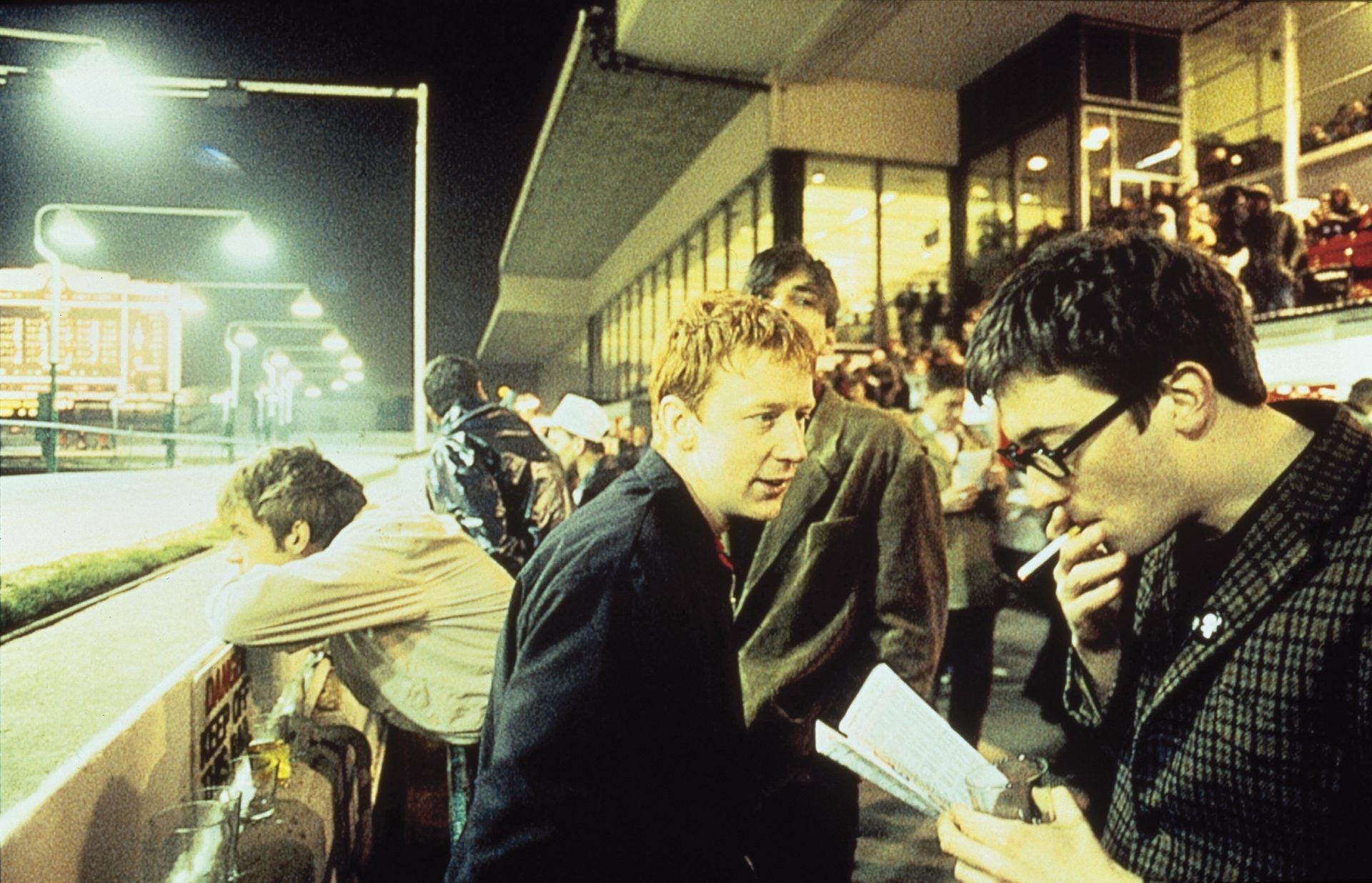
Despite its manic genre-hopping, Parklife holds together wonderfully thanks to the through-line of Albarn’s lyrical themes and melodies, not to mention the performances and the sheer hookiness of every song. It’s also all wrapped up in one of the greatest album packages of the 1990s, a day at the dog track with Blur, created by design firm Stylorouge with the album’s tracklist displayed like a racing form on the back cover. The iconic cover photo, featuring wild-eyed greyhounds taken by Bob Thomas, has all the hope, desperation, elation and disappointment expressed in Parklife‘s 16 songs in one vivid shot. “In a way the Parklife sleeve is all intellect, and no soul,” Coxon said in a retrospective piece on the album art, “but it’s also sensational, graphic and perfect.” Blur would go on to make many other great records, including 2023’s The Ballad of Darren, but no album captured the zeitgeist with earworm after earworm like Parklife.
