
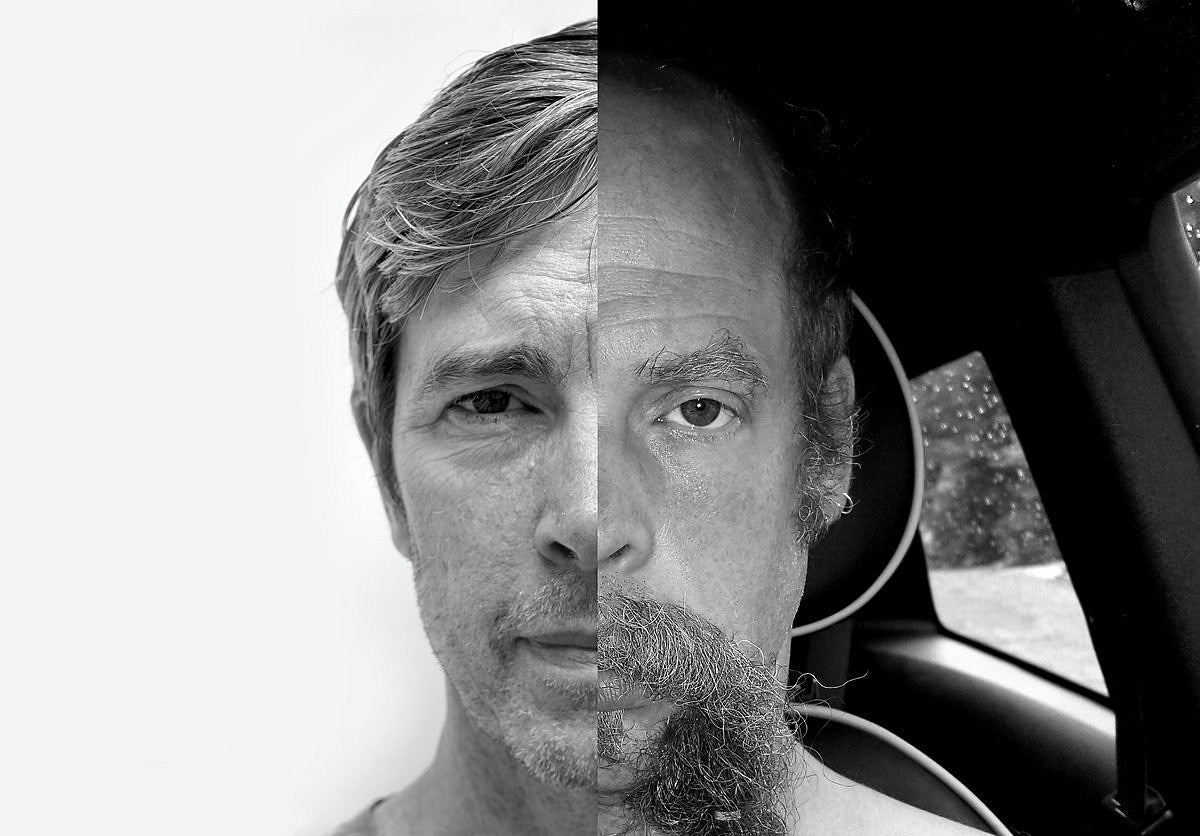

Bill Callahan and Bonnie “Prince” Billy have teamed up to cover “Blackness of the Night,” the classic protest song by Yusuf Islam, from 1967 back when he was known as Cat Stevens. Making it even more of a Drag City supergroup, the cover also features Chicago’s AZITA (who recently returned with her first new music in years). It’s a gorgeous song and Bill, Will and ATIZA all sound amazing together. Here’s the backstory from Drag City:
Determined to make a new friend out of an old favorite, Bonnie ‘Prince’ Billy and Bill Callahan dropped a tape letter through AZITA’s mail slot, asking only for one in return. The contents they sent: one of Cat Stevens’ earliest protest songs. What they got back: a version of the song to sing together! Though unfamiliar with the tune, AZITA arranged and played it entirely, attaining celestial translucence by downshifting into a slower tempo. The harmonies of Bonnie and Bill step into the spiritual spotlight, as fresh dollops of synth and other keys bloom in the darkness. Cat’s version pays a debt to the churchy sound of Procol Harum; AZITA spends the sum in other ways, transposing the instrumental break into a heavenly guitar break before giving way to the two Bills, who take it out with a last pass of harmonized hope against hopelessness.
Yusuf released a new version of “Blackness of the Night” as a single back in 2017 and wrote at the time, “‘Blackness’ of the Night was one of my first ‘protest’ songs for the 60’s. Growing up in London after the War, the memories were strong and bombed ruins still riddled the City. It also reflected the feeling of emptiness wandering the streets at night alone, pondering how to survive in a dark unknown future.”
A lot of us are pondering how to survive in a dark unknown future these days. Listen to the cover, and Yusuf’s 2017 version, below.
Bill Callahan released Gold Record in September while Bonnie Prince Billy released I Made a Place last November.
—
Must-Hear Folk Albums of 2020 So Far

Bill Callahan – Gold Record

Phoebe Bridgers – Punisher

Jason Isbell & the 400 Unit – Reunions

Arlo Mckinley – Die Midwestern

Bob Dylan – Rough and Rowdy Ways

Neil Young – Homegrown
In a 1975 Rolling Stone interview, Neil called his long-shelved-and-now-finally-released album Homegrown "the darker side to Harvest." With more hindsight, he called it "the missing link between Harvest, Comes a Time, Old Ways and Harvest Moon" in Jimmy McDonough's 2002 Neil Young biography Shakey. Those albums are all on Neil's folkier, more acoustic side, and Homegrown is indeed cut from that cloth. As soon as you hear the opening of "Separate Ways," you're transported right back to the warmth of the Harvest era. It's of the same proto-slowcore variety of that album's opener "Out On the Weekend," but even more haunting and melancholic. Just 30 seconds in, and Homegrown already lives up to the description Neil gave Cameron Crowe of it 45 years ago.
That same mood carries over into second track "Try," which -- like "Separate Ways" -- features The Band's Levon Helm on drums, and Levon really managed to capture the bare-bones, slow-paced drumming style that these types of quietly revolutionary Neil Young songs always demanded. "Try" is also one of two songs on Homegrown with backing vocals by Emmylou Harris (the other being "Star of Bethlehem"), and her soaring voice makes for a truly lovely contrast with Neil's more somber delivery. And as melancholic as those songs are, they've got nothing on the melancholy of the entirely-solo cuts "Mexico" (voice and piano) and "Kansas" (voice, acoustic guitar, and harmonica), or on "White Line," which features Neil, his acoustic, and his harmonica joined only by some lead guitar by The Band's Robbie Robertson. It's on those breathtaking songs where you can really hear why Neil -- coming right off the release of On The Beach -- might have felt like he was digging himself into a hole of dour, depressive music. But all these years later -- now that Neil has cemented his legacy over and over again and proven to be an artist who can evolve and adapt with the times without losing his own uniqueness -- those songs feel like buried treasure, especially for fans who gravitate towards his most hushed material. Full review here.

Bonny Light Horseman – Bonny Light Horseman

Waxahatchee – Saint Cloud

The Mountain Goats – Songs for Pierre Chuvin

Jason Molina – Eight Gates

The Microphones – Microphones In 2020

Laura Marling – Song For Our Daughter

Stephen Malkmus – Traditional Techniques (Matador)

Nadia Reid – Out of My Province

Bill Fay – Countless Branches

The Innocence Mission – See You Tomorrow

The Secret Sisters – Saturn Return

Courtney Marie Andrews – Old Flowers

Becca Mancari – The Greatest Part
